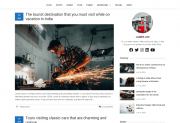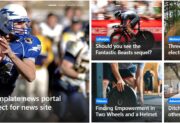
At a glance, blog websites and news portals may look similar. Both publish articles, both rely on categories, and both often use Bootstrap-based templates for layout flexibility. However, beneath the surface, blogs and news websites are built for very different purposes, and their templates reflect that difference.
Choosing the wrong template can limit growth, confuse readers, and make content management harder than it needs to be. This article breaks down the key structural differences between blog and news templates in Bootstrap, offers practical tips for starting each type of site, and helps you decide which template fits your goals best.
Blog vs News Website: Different Goals, Different Structures
The most important difference between blogs and news portals is content intent.
Blogs are usually:
- personality-driven or niche-focused
- slower in publishing frequency
- designed for long-term evergreen content
News websites are typically:
- update-driven and time-sensitive
- focused on headlines and freshness
- built to scale with high publishing volume
Because of this, Bootstrap templates for blogs and news sites prioritize different layout and navigation patterns.
Structural Differences in Bootstrap Templates
Content Hierarchy
Blog templates usually emphasize individual articles. The layout often highlights featured posts, author presence, and reading flow. Homepage sections are simpler, allowing posts to breathe.
News templates, on the other hand, are headline-centric. They prioritize:
- multiple content sections
- category blocks
- breaking news placement
- editorial hierarchy
The homepage of a news site is designed to show many stories at once, while a blog homepage often encourages readers to dive deep into fewer articles.
Navigation and Categorization
Blogs typically use limited categories and tags. Navigation is straightforward and often secondary to the content itself.
News portals require stronger navigation systems. Categories, subcategories, and topic sections are central to usability. Bootstrap news templates usually include multi-level menus and clearly separated content zones.
This difference affects not only UX but also how editors manage content daily.
Publishing Frequency and Layout Scalability
A blog template assumes slower publishing cycles. Its design does not need to constantly rearrange content based on time sensitivity.
News templates are built for velocity. They must handle frequent updates without breaking visual balance. Bootstrap grids play a major role here, allowing layouts to adapt dynamically as new articles are published.
Scalability is a defining factor. A template that works perfectly for a blog may feel overwhelmed when used for a busy news portal.
Tips for Starting a Blog Website
If your goal is blogging, clarity and consistency matter more than volume.
Start with a template that:
- prioritizes typography
- supports long-form reading
- highlights featured articles
- keeps navigation simple
Focus early on content quality and niche authority. A well-structured blog template helps readers build a connection with your voice and ideas.
Avoid news-style clutter if you publish occasionally. Too many sections can dilute attention and make the site feel empty.
Tips for Building a News Website
News websites require planning from day one.
Before choosing a template, consider:
- how many articles you will publish daily
- whether you need multiple categories or sections
- editorial workflow and team size
- monetization and ad placement needs
A strong news template should support content growth without redesigning every few months. Bootstrap-based news themes are especially useful here because they provide flexible grids and reusable components.
Speed, clarity, and hierarchy are critical. Readers should find important stories instantly.
Choosing the Right Template: Blog or News?
The biggest mistake is choosing based on appearance alone.
Ask yourself:
- Is my content evergreen or time-sensitive?
- Do I want readers to follow a writer or follow updates?
- Will I scale content volume significantly?
If your content revolves around opinions, tutorials, or personal insights, a blog template is often the better choice. If your site focuses on updates, reporting, or multi-topic publishing, a news template is more suitable.
That said, some modern templates blur this line.
Using One Template for Both Blog and News
Not every project fits neatly into one category. Many creators start as blogs and gradually evolve into news or magazine-style platforms.
In this case, flexibility matters.
If you are looking for a WordPress theme that can work for both news websites and blogs, Bootnews is worth exploring. It offers multiple demo variants, allowing you to choose layouts that feel editorial-heavy or blog-oriented depending on your needs.
This makes it a practical option for:
- growing blogs that plan to scale
- niche news platforms with long-form content
- magazine-style websites mixing news and opinion
You can explore the available demos here:
👉 https://bootstrap.news/demos/
Common Mistakes When Choosing Templates
Many site owners underestimate how much structure affects content strategy.
Common issues include:
- using blog templates for high-volume news publishing
- choosing news templates that overwhelm small blogs
- ignoring mobile layout behavior
- selecting templates without future growth in mind
A template should support where your site is going, not just where it is today.
Final Thoughts
Blogs and news websites serve different purposes, and their Bootstrap templates are designed accordingly. Blogs focus on depth, voice, and readability. News portals focus on speed, hierarchy, and scale.
Understanding these differences helps you choose a template that supports your content strategy rather than limiting it.
Whether you are starting a personal blog, launching a digital magazine, or building a full news portal, the right template creates a foundation for growth. When flexibility matters, choosing a theme with multiple layout variants can give you room to evolve without starting over.